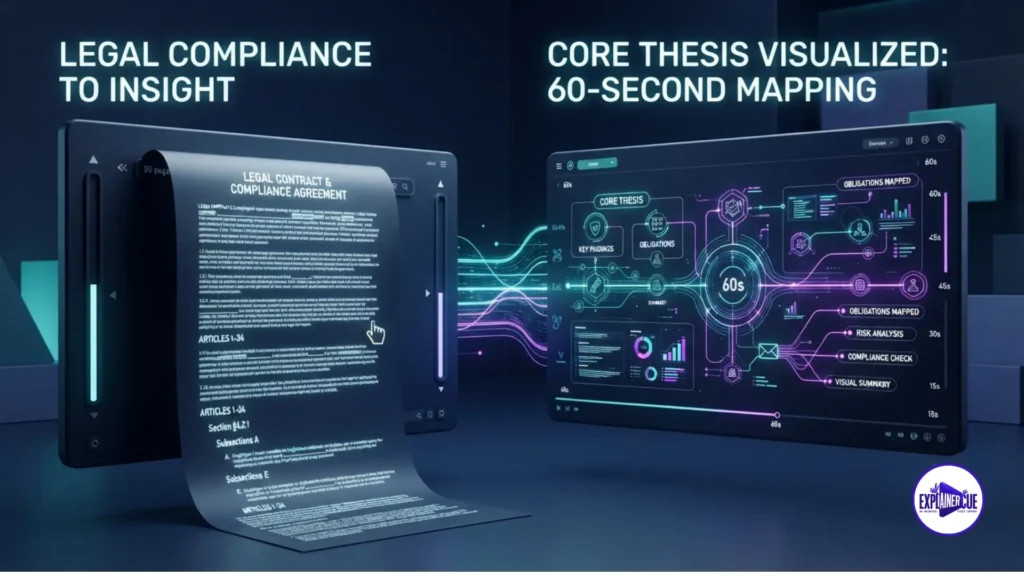
I. Introduction: The Death of the “Feature-Dump” Presentation
In our experience at ExplainerCue, most B2B companies are losing revenue before they even reach the contract stage. The culprit? The “Feature-Dump” presentation.
When you present a complex SaaS or industrial solution to a C-level executive, you are not just sharing information. You are competing for their limited attention span. If your deck relies on static bullet points, you are creating a “Clarity Gap”—the dangerous space between what you sell and what your prospect understands.
A successful Business Marketing Presentation must shift from being an informational slide deck to being a strategic asset. It is not about how many features you have; it is about how clearly you articulate the ROI of those features.
II. Bridging the Clarity Gap: Why Your Current Deck Fails
Complexity is often mistaken for authority. Many technical founders believe that showing every technical spec builds trust. In reality, it triggers “Analysis Paralysis.”
When a CTO or Marketing Manager is bombarded with architectural diagrams and complex tables, their brain enters a defensive state. They stop listening for value and start looking for reasons to reject the proposal due to perceived implementation risk.
[Visual Placeholder: Isometric motion graphic showing a fractured, confusing workflow being streamlined into a single, seamless, integrated system.]
Static slides cannot capture the dynamic nature of your software. By ignoring the need for visual motion, you are effectively asking your prospect to imagine the value rather than showing it to them.
III. Strategic Integration of Motion into Your Business Marketing Presentation
To close the Clarity Gap, you must adopt a b2b explainer video strategy that complements your presentation. Motion design is the “visual bridge” that turns abstract technical concepts into tangible business outcomes.
When you integrate motion into your deck, you control the audience’s focus. You aren’t just showing a feature; you are demonstrating a workflow.
- Pacing: Motion design allows you to reveal complex data sets in digestible segments.
- Focus: Animations guide the eye, ensuring stakeholders see the most profitable features first.
- Narrative Control: A professional motion asset ensures that the presentation quality remains consistent, regardless of who is delivering the deck.
IV. Advanced Techniques for High-Conversion Presentations
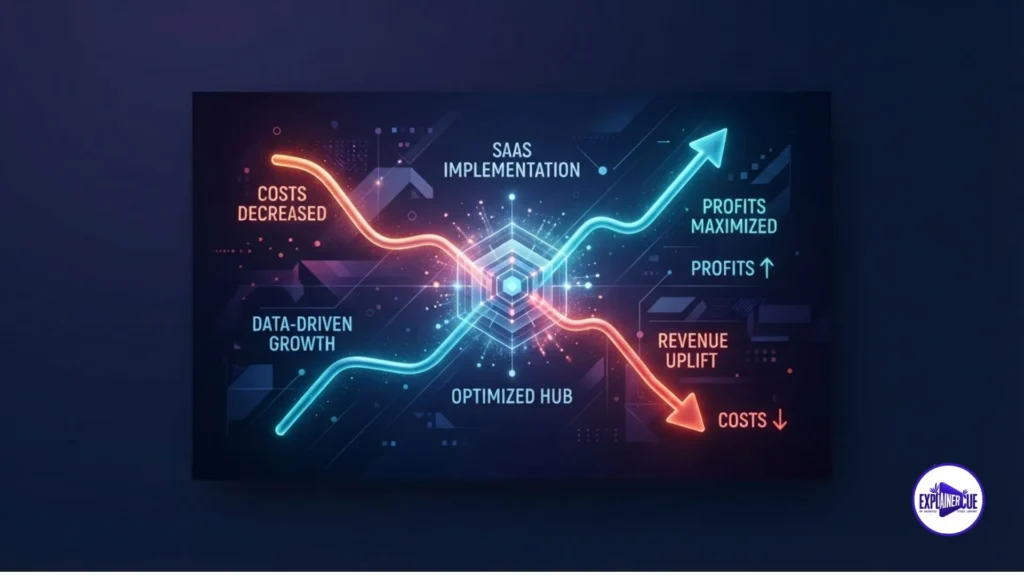
To ensure your Business Marketing Presentation stands out, you must treat every slide as a conversion opportunity. You are no longer selling software; you are selling “Operational Efficiency” and “SaaS ROI.”
The 3-Second Rule:
Within three seconds of a slide appearing, the prospect must understand exactly what the visual represents. If they have to ask, “What am I looking at?”, you have lost the room.
LSI Keywords and Context:
Use language that signals institutional maturity. Terms like “Scalable Infrastructure,” “Risk Mitigation,” and “Product-Led Growth” should be woven into your visual storytelling to reinforce your position as a high-authority provider.
V. Formatting for Authority: Mobile-First and Scan-Friendly
Decision-makers often review decks on tablets or mobile devices between meetings. If your presentation is cluttered, it will be discarded. Minimalism projects confidence.
5 Signs Your Presentation is Causing a “Clarity Gap”:
- Your slides contain more than 40 words of text.
- The audience is reading the screen instead of listening to you.
- Your charts require a “key” to understand.
- You use stock photos that don’t relate to your specific workflow.
- The connection between a feature and a business outcome is not explicitly stated.
VI. Case Study: Simplifying Complexity for Enterprise Stakeholders
We recently worked with a client struggling to explain a multi-brand network integration. They had a 60-minute technical brief that was failing to convert prospects.
By replacing their static tables with a motion-driven visual narrative, we reduced their pitch to a 5-minute presentation that covered the same technical ground but with 100% stakeholder comprehension.
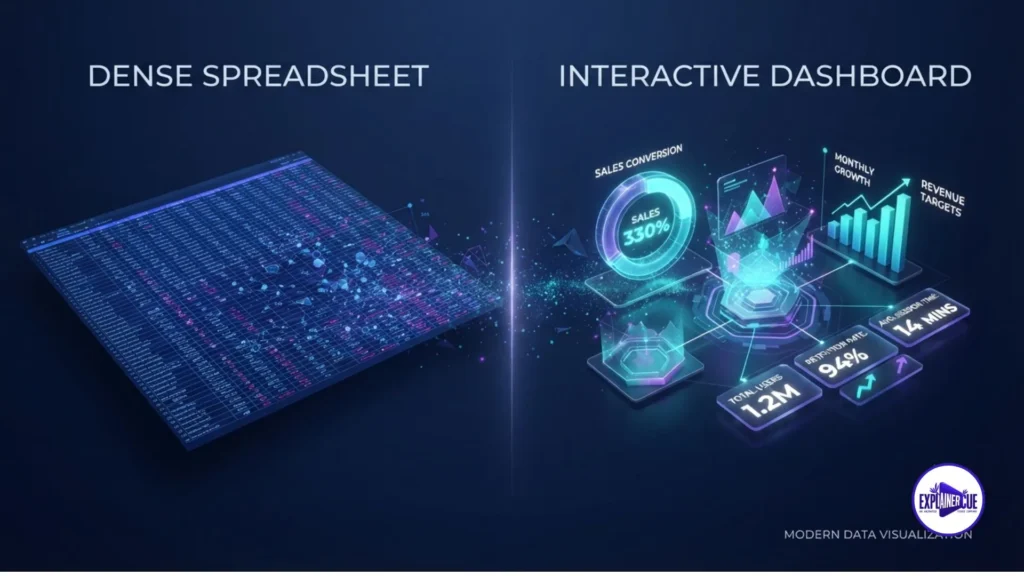
This shift turned a “technical discussion” into a “business decision.” The clarity provided by the motion design effectively removed the fear of complexity from the buyer’s mind.
VII. Measuring the Impact: Beyond Dwell Time
In the digital age, a presentation is often a living document. Track how long prospects spend on specific slides. High dwell time on a slide without an animated asset often indicates confusion, while high dwell time on a slide with a motion asset indicates genuine interest.
By aligning your Business Marketing Presentation with these engagement metrics, you can refine your messaging over time, turning your deck into a data-backed sales machine.
VIII. Conclusion: Elevate Your Narrative
Your presentation is a product. If it is clunky, slow, or confusing, that is how the market will perceive your company. By mastering visual storytelling, you bridge the Clarity Gap and move your prospects toward a “Yes.”
Let’s audit your product messaging—book a strategy session.
At ExplainerCue, we specialize in translating complex technical value into high-converting visual narratives. Let’s ensure your next presentation is your most successful one yet.