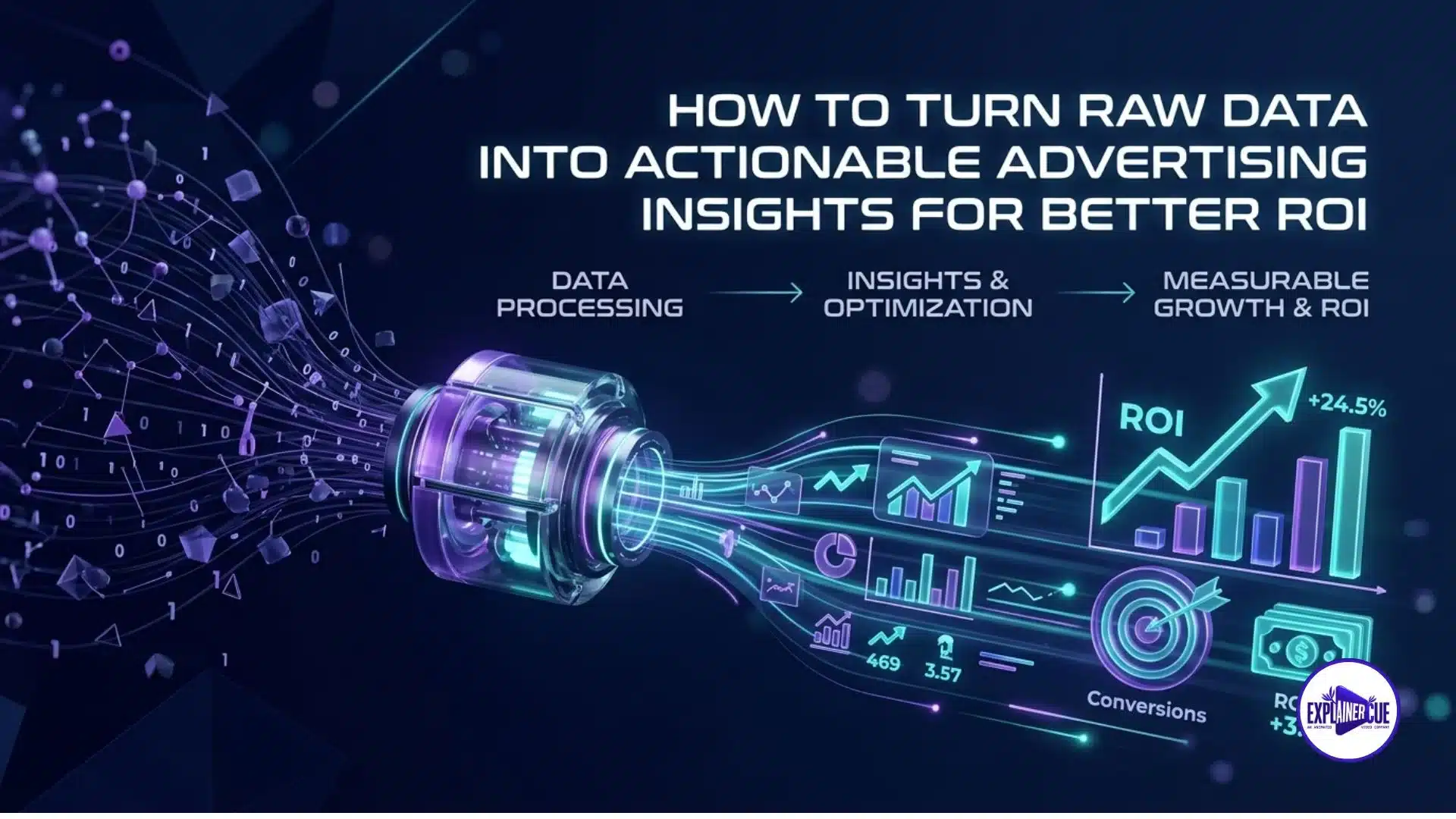
Are you pouring thousands of dollars into digital campaigns only to see stagnant conversion rates? Wasting your marketing budget on underperforming creatives is one of the fastest ways to kill profitability.
When you operate without clear advertising insights, you are essentially gambling with your ad spend, allowing data-savvy competitors to easily outbid and outperform you. The solution is transitioning from a reactive approach to a proactive, analytics-based framework.
By learning how to extract and implement the exact metrics that matter, you can systematically lower acquisition costs and scale your most profitable campaigns. Here is your step-by-step guide to transforming raw data into revenue-generating decisions.
Table of Contents
Step 1: Establish Baseline Ad Campaign Analytics
You cannot optimize what you do not accurately measure. The first step to generating actionable intelligence is ensuring your tracking infrastructure is flawless.
Many B2B companies fail because they rely on platform-reported data (like LinkedIn or Google Ads) without verifying it against their internal CRM. By integrating server-side tracking, you eliminate data discrepancies caused by ad blockers and privacy updates.
Once your tracking is secure, prioritize metrics that directly impact revenue. Shift your focus away from vanity metrics like basic impressions, and strictly monitor your Cost Per Acquisition (CPA) and Lead-to-Close velocity.
Step 2: Build a Data-Driven Ad Strategy
With accurate tracking in place, it is time to deploy a data-driven ad strategy. This requires treating every campaign as a controlled experiment where you isolate specific variables.
Never test a new headline, a new audience, and a new visual all at the same time. If the campaign succeeds, you won’t know which element actually drove the conversion.
- A/B Test Systematically: Test one element per week. Start with the creative hook, then optimize the ad copy, and finally refine your call-to-action.
- Segment by Intent: Group your audiences based on their stage in the buyer’s journey (awareness vs. bottom-of-funnel).
- Analyze the Drop-off: Use heatmaps on your landing pages to see where users lose interest after clicking your ad.
Step 3: Capitalize on Digital Advertising Trends
The modern B2B buyer is overwhelmed with whitepapers and static PDF reports. To capture and hold attention today, you must align your strategy with current digital advertising trends.
The most significant shift is the dominance of motion graphics and custom animation in the feed. Video assets consistently lower cost-per-click while simultaneously explaining complex SaaS or FinTech products in seconds.
To truly dominate your sector, you must understand enterprise scale advertising insights mapping to see how high-level video strategies directly influence buyer behavior. Visual storytelling is no longer optional; it is a baseline requirement for high-converting funnels.
Step 4: Maximize B2B Marketing Performance
Unlike B2C e-commerce, enterprise sales cycles take months. Therefore, measuring immediate click-throughs will give you a fractured view of your B2B marketing performance.
You must track how ad engagements influence the entire pipeline. Did an executive watch 75% of your animated explainer video before booking a discovery call three weeks later?
That video interaction is a critical touchpoint. By using multi-touch attribution models, you can accurately assign value to the top-funnel assets that initiate your most lucrative deals.
Step 5: Execute Ad Spend ROI Optimization
The ultimate goal of gathering intelligence is aggressive ad spend ROI optimization. Once you have enough statistical significance, it is time to reallocate your budget ruthlessly.
Identify the bottom 20% of your underperforming campaigns and pause them immediately. Take that liberated budget and inject it into your top-performing video creatives to scale your lead generation.
Consistently pruning the dead weight from your ad accounts ensures that your algorithm bidding becomes smarter, leaner, and exponentially more profitable.
Conclusion
Generating high-quality leads in the enterprise space requires more than just a large budget. It requires a relentless focus on extracting and acting upon concrete advertising insights.
By setting up accurate tracking, isolating variables for A/B testing, and leveraging high-converting video assets, you can transform your ad campaigns into predictable revenue engines. Stop guessing what your audience wants, and let the data dictate your creative strategy.
Ready to stop wasting your ad spend? Start by upgrading your visual assets. Contact ExplainerCue today to discover how our strategic, high-converting animated videos can drastically lower your CPA and accelerate your sales pipeline.